November 12, 2025
Takeaways from InfoSec World 2025: Passwordless access drives better outcomes

For years, organizations have invested heavily in creating stronger, more complex passwords to protect critical systems. Yet, passwords remain a persistent weak link in cybersecurity and a major source of friction for users. In fast-paced, high-stakes critical industries like healthcare, manufacturing, and public safety, every second counts, and cumbersome logins or inefficient multifactor authentication (MFA) workflows can hinder productivity, frustrate staff, and even introduce new security risks.
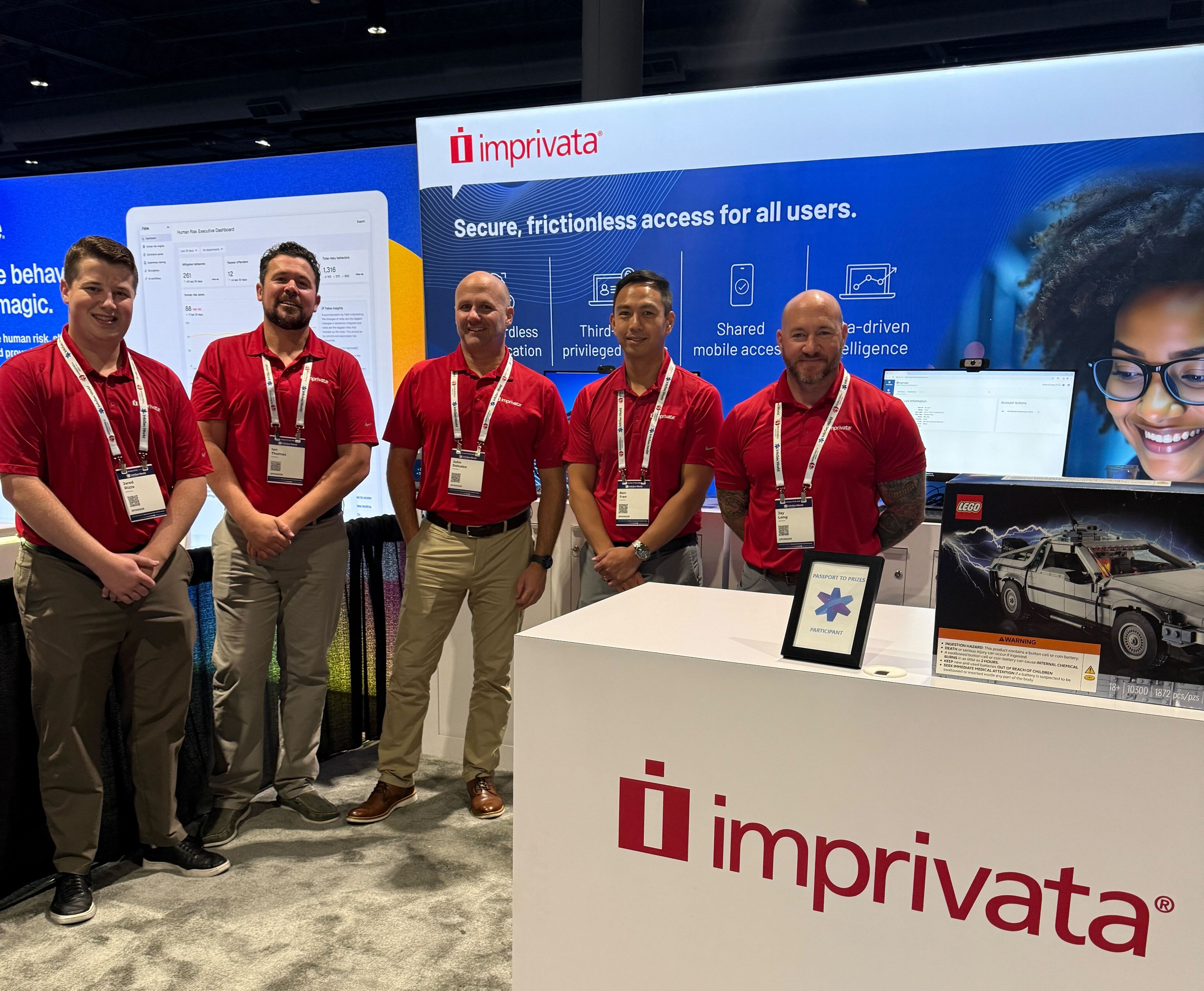
I recently attended InfoSec World 2025, held in Orlando, Florida, with the Imprivata team. It was a great event where cybersecurity leaders and practitioners came together to explore a variety of information security and IT topics – from passwordless authentication and modern identity and access management (IAM) to the implications of AI across the cybersecurity landscape.
Echoing the momentum seen earlier this year at Identiverse, where identity and access management was spotlighted as a catalyst for both security and efficiency, the discussions and presentations at InfoSec World underscored a shared vision: smarter, frictionless, passwordless access leads to stronger cybersecurity and business outcomes. From shared workstations to mobile access for shift-based workers, Imprivata showcased how eliminating passwords not only enhances security and compliance but also empowers frontline teams to work faster, safer, and more efficiently.
Here are some of our highlights from the event:
Spotlighting passwordless access—in action
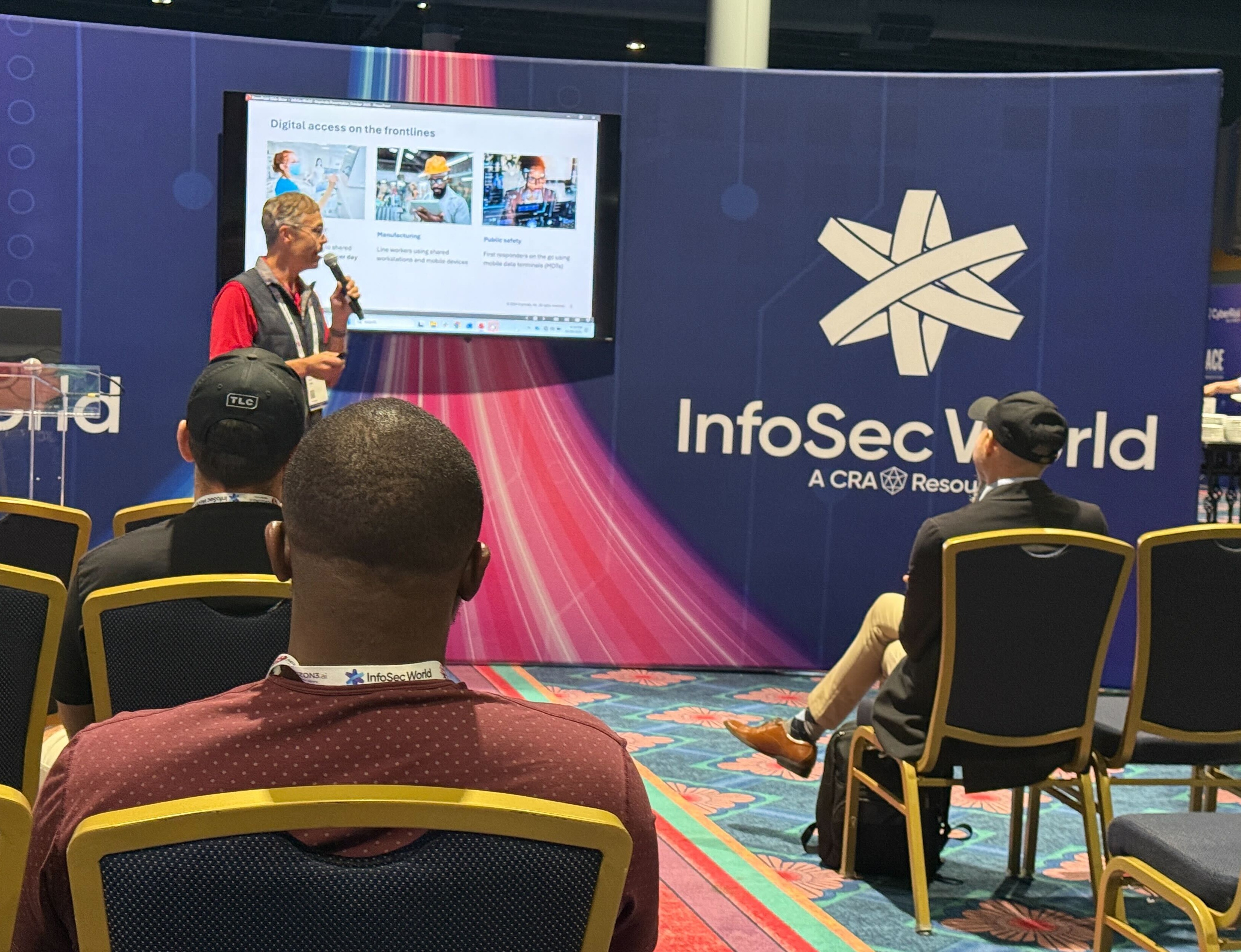
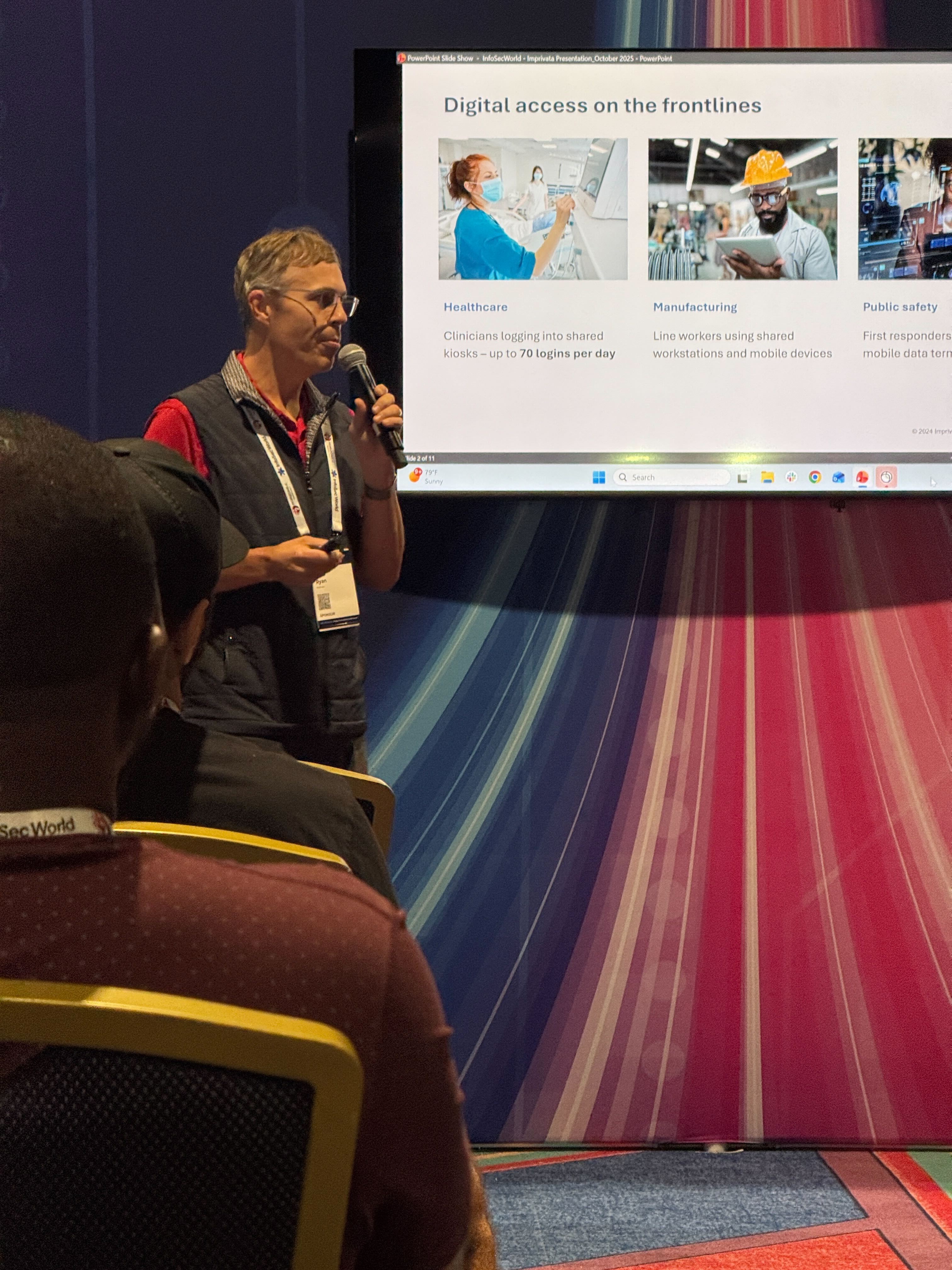
At the event, I had the opportunity to take the stage in the Tech Theater to present “Password Less, Accomplish More: Advancing Passwordless Authentication in Critical Industries.” It was an energizing session focused on how organizations can balance security, usability, and efficiency, and why passwordless access is central to achieving that balance.
During the session, I shared how leading organizations are:
- Mapping authentication to real-world workflows across shared workstations, mobile devices, and hybrid IT environments.
- Implementing phishing-resistant, passwordless methods, including biometrics, FIDO2 security keys, badges, and passkeys, to meet evolving compliance and access control requirements.
- Measuring real results through access data, such as reduced credential-related incidents, fewer IT help desk calls, and reclaimed productivity for frontline workers.
The message was simple: passwordless authentication isn’t just a security upgrade, it’s a productivity accelerator. In industries where every second counts, smarter access helps people work faster and safer, delivering measurable outcomes for both users and organizations.
Building security around IAM
As I reflected on conversations from the week, one thing was clear: Building security around identity is crucial for effectively navigating the threat landscape. Through shared device access management strategies, data analytics, and identity threat detection and response (ITDR), organizations are proving that streamlined access delivers measurable ROI. In some cases, that translates to as much as $3.9 million in annual savings from improved productivity alone.
But the story doesn’t end with efficiency. As the threat landscape grows more complex—with AI-driven exploits, expanding machine identities, the expiration of CISA 2015, and tightening compliance requirements—organizations must adopt real-time, adaptive access strategies rooted in Zero Trust principles. This means continuously verifying trust across every user and device, from frontline clinicians and manufacturing line operators to contractors, admins, and third-party vendors.
The path forward requires granular control and visibility, including credential-per-task enforcement, just-in-time access for privileged users, session auditing, and data-driven insights that turn identity management into a continuous feedback loop for security and performance. When done right, these capabilities mitigate cyber risk and empower teams to work securely and efficiently at scale.
To learn more about how to align the security and user experience strategy at your organization, book a demo today.