Access Management — 2nd consecutive year
Embedded in 1/3 of all Epic health systems
Across 45+ countries
THE GAP MOST TEAMS DISCOVER TOO LATE
Not every identity solution was designed for the clinical environment.
Consumer-grade biometric platforms and general-purpose identity tools were built for a single verification moment, like onboarding or a password reset. Healthcare identity is different: authentication may repeat hundreds of times per shift, across shared devices and within high-stakes clinical workflows.
| Built for a single event Generic identity verification | Built for every moment care happens Imprivata Clinical Identity Management |
|---|---|
| Verifies identity at a single point in time | Continuously connects identity to the clinical workflow |
| Assumes one user per device | Enables fast user switching and secure session transfer |
| Operates outside clinical applications | Integrates directly with EHR and clinical workflows |
| Records authentication events | Connects access to PHI with a verified user identity |
| Does not provide clinical EPCS workflows | Supports EPCS-compliant multifactor authentication |
| Relies on users to manually lock sessions | Automatically protects sessions while preserving continuity |
What healthcare-grade identity actually requires

Imprivata provides passwordless, badge or biometric, instant session switch
Nurses and clinicians share workstations constantly. A solution that requires full Windows logout between users creates friction that clinicians route around with shared passwords.

Imprivata's solutions are embedded in Epic, Cerner, and InterSystems at the API level
SSO wrappers and browser-level overlays break when EHR versions update. Native API integration means authentication is built into the clinical workflow rather than bolted onto it from the outside.

With Imprivata, EPCS MFA is built into clinical ordering workflows
Electronic Prescribing of Controlled Substances regulations require authorized prescribers to use MFA that is tied to a verified identity within the prescribing workflow.

With Imprivata, every action is tied to a verified user identity, not a device
HIPAA requires that access to protected health information (PHI) be traceable to a specific person, not just a workstation or session.

Imprivata uses badges or biometric check-out/ins on Android and iOS clinical devices
Mobile clinical devices are increasingly shared. Without device-level identity management, they become a PHI liability if left unattended between patients.
Proven Outcomes in Healthcare



Three things generic identity tools can't replicate in healthcare

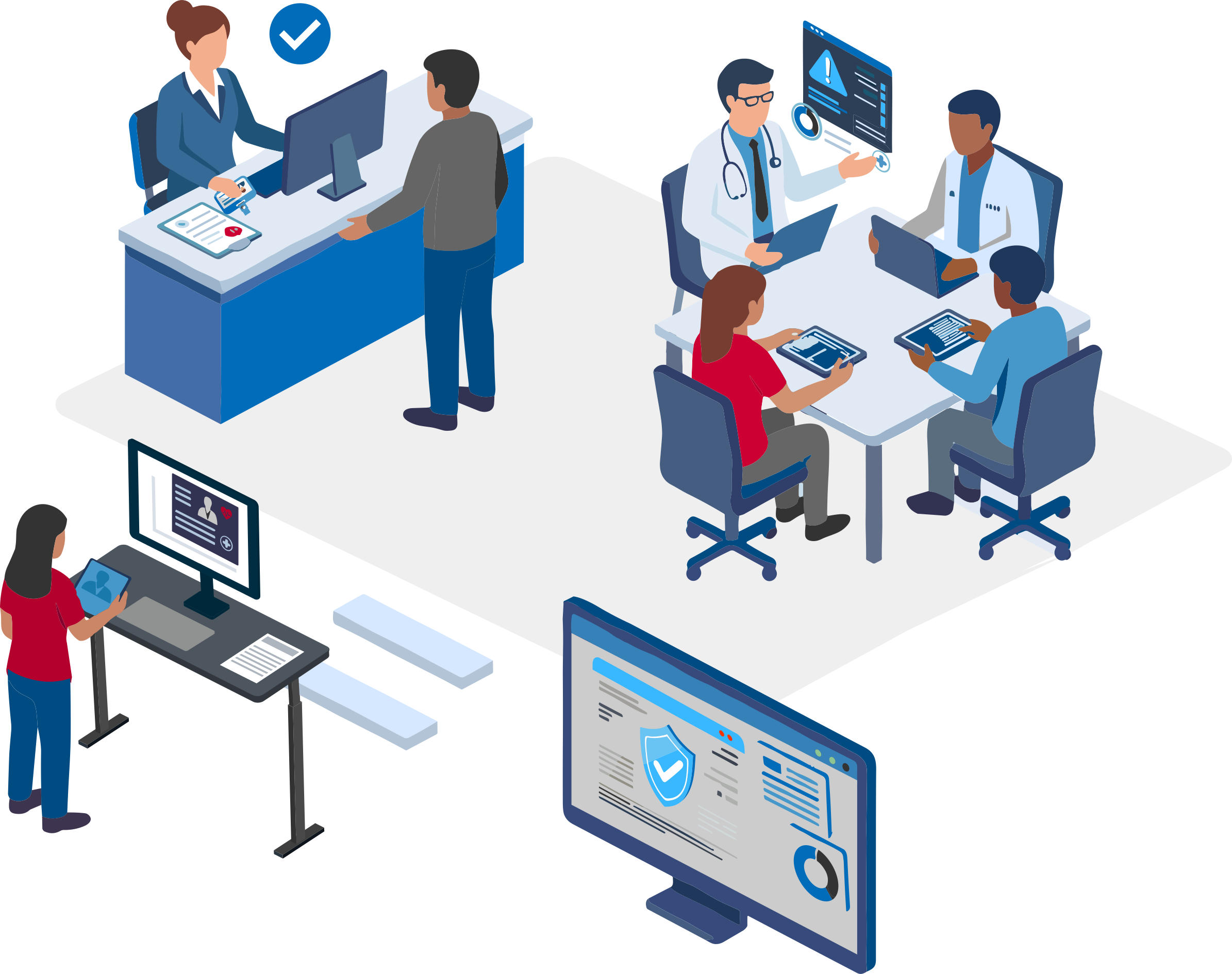
Badge tap and biometric authentication grant seamless, passwordless access to shared workstations and mobile devices.

Purpose-built Imprivata solutions integrate with complex clinical workflows that include Epic Systems tools and EPCS.

Continuous monitoring and AI-powered analytics identify access patterns and flag anomalies to protect systems and data.
What teams ask when they're evaluating identity platforms