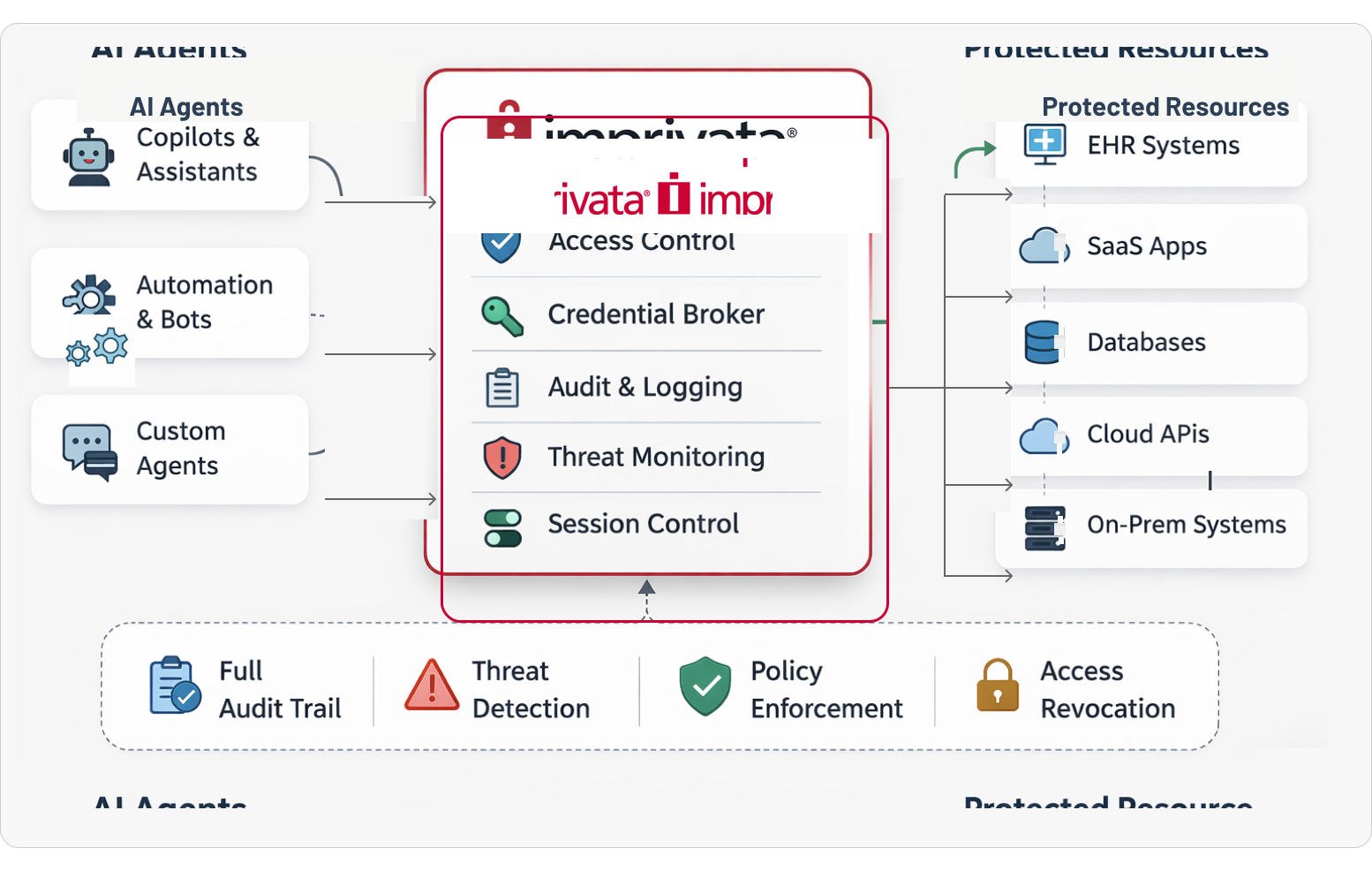
AI Agent Identities
AI agent identities are unique digital identities assigned to autonomous or semi-autonomous AI systems that interact with enterprise applications, data, infrastructure, and information systems. As organizations adopt agentic AI to automate operational tasks, customer interactions, analytics, and decision-making processes, these AI-driven entities increasingly require controlled access to sensitive systems and resources. Unlike traditional rule-based automation, AI agents can independently initiate actions, make contextual decisions, and interact across multiple platforms and information systems, creating a need for identity governance models specifically designed for non-human actors.
The rise of AI agent identities reflects the growing role of agentic AI across industries such as healthcare, financial services, manufacturing, retail, education, and critical infrastructure. Organizations use AI agents to support tool automation, streamline workflows, process large volumes of information, and coordinate actions across interconnected business applications and information systems. For example, AI agents may retrieve records from enterprise databases, initiate service requests, manage infrastructure tasks, analyze operational data, or interact with customer-facing applications. Because these systems often operate with elevated permissions and maintain persistent connectivity, organizations must ensure that all AI agents are authenticated, monitored, and restricted in accordance with clearly defined policies.
Without proper oversight, AI-driven automation can introduce significant agentic risk. AI agents that operate without identity-based governance may gain excessive privileges, access unauthorized resources, or perform unintended actions at machine speed. This creates challenges for compliance, accountability, and cybersecurity, particularly when organizations cannot clearly trace which automated system performed a given action. Implementing controls to manage agentic risk helps organizations apply least-privilege access policies, enforce granular authorization controls, monitor activity logs, and revoke access when AI-driven workflows change or are retired. These controls help preserve trust in increasingly autonomous environments while reducing operational and security risks.
As AI adoption accelerates, many organizations are integrating AI agent identities into broader privileged access management strategies. Managing AI identities alongside human users, service accounts, and machine identities enables organizations to maintain centralized governance across all privileged actors operating within enterprise environments. This unified approach improves visibility into automated activity, supports auditability, and helps organizations scale agentic AI initiatives without weakening security controls or disrupting operational efficiency.
Imprivata Privileged Access Security extends identity governance capabilities to AI agent identities by allowing organizations to create and manage non-human privileged identities directly within the broader privileged access management ecosystem. This approach enables AI-driven automation to operate under the same centralized authentication, authorization, and monitoring framework used for human and service identities. Through granular permission-based access controls, organizations can govern AI agents consistently across workflows, reduce agentic risk, maintain accountability, and support secure adoption of autonomous systems. With these capabilities, Imprivata can help organizations bring AI-powered automation under centralized privileged access governance while preserving compliance, accountability, and security across interconnected information systems.